Who's Involved
Research, Education & Support

William Isom II
Land & Infrastructure
William Isom is a East Tennessee native & the director of Black in Appalachia. He coordinates the project's research, community data base development, documentary film & photography production, oral history collection and educational events with residents.

Alona Norwood
Community Archivist
A native of Elizabethton, Tennessee & graduate of Berea College. She received a Masters in Information Science at UNC Chapel Hill. Alona manages the digital community archive and is an expert in equitable community-based archival processes.


Fredrick Watkins
Audio Producer
A native of Nashville, TN, Fredrick is passionate for creativity in all its forms. With MA degrees from TSU & Argosy University, He works with K-12 Youth, guides students through the college admissions process & cultivates opportunities through talent acquisition roles. His professional path reflects a commitment to education and empowerment.


Precious Brown
Black Appalachian Women Oral Histories

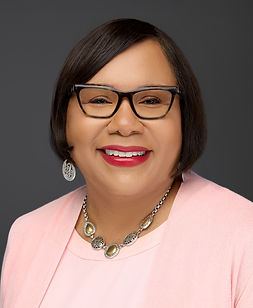

Preston Mitchell
Racial Justice Organizer
Board of Directors
-
Jaimie Bagwell, Chair, Knoxville, Tenn.
-
Bill McCabe, Treasurer, Hancock County, Tenn.
-
Catherine Wilson, Secretary, Knoxville, Tenn.
-
Ron Carson, Pennington Gap, Va.
-
Rev. Roger Mills, Whitesburg, Tenn.
Our History

Black in Appalachia began in 2012 as an intiative of East Tennessee PBS in Knoxville, Tennessee. Created by C. Lee Smith & William Isom as a project to produce & make publicly available short documentary films on Black life & history in the region.
Our first film was The Swift Story, a documentary about Swift Memorial Institute, the late-HBCU that once operated in Rogersville, Hawkins County, Tennessee.
Since that time, East Tennessee PBS produced nearly a dozen short films under the Black in Appalachia initiative.
As our work continued to grow, we realized that the documentation & labor needs for Black communities & families to tell their own stories was greater than what could be done with short documentaries alone. One of the needs identified, & articulated by Mrs. Geraldine Manuel of Greeneville, Tennessee was how do we include personally-held materials in the consideration of these histories? The funeral programs, family photographs & other items maintained by elders.

With the assistance of Saro Lynch-Thomason (ETSU), Katie Myers & Juniper Star (UTK) & many semesters of University Tennessee Information Science Graduate students, we settled on the Omeka platform to begin building & learning how to develop a
Community History Archive, now hosting thousands of items.
We began organizing & hosting Community History Days, first at the Negro Women's Civic Club in Greeneville, then at Phillippi Missionary Baptist Church in Elizabethton. These events, conducted with local residents, archivists, librarians & students became a model for us to apply labor to peoples' personal histories in a way that we've, collectively, not had the luxury of benefiting from. Community History Days became venues in which oral histories could be recorded, personal items could be digitized for residents & advice on storage & physical repository advice could be shared. Oftentimes, the gathering of people around their shared histories have also been the launching pad for longer term community organizing outside of Black in Appalachia's labor.

Rebecca Howard (UTK), was our first paid, part-time, Community Archivist followed by Carter County, Tennessee's Alona Norwood (Berea College/UNC Chapel Hill). Ms. Norwood was Black in Appalachia's first full-time employee.

From 2020 to 2025, Black in Appalachia & East Tennessee PBS embarked upon the production of a podcast.
With UTK Sociologist, Dr. Enekshi El-Amin, Angela Dennis, journalist & producer Chris Smith at the helm, this conversational style podcast would be the most popular endeavor any of us had ever worked on.
Through it's 5 seasons, we saw the national spotlight on Black Appalachian narratives & Black in Appalachia would be highlighted in the New York Times, YES! Magazine & CNN's United Shades of America, to name a few.
Under the leadership of Dr. Enkeshi El-Amin, the Black in Appalachia podcast worked to develop a new mechanism for young people & scholars to consider the Mountain South in a contemporary light, examined through a sociological lens. In the 5 seasons of it's run, we talked with the likes of Deesha Philyaw, Cornel West & Walter DeBarr.

Around the time of the Covid-19 pandemic & the international protests around the extrajudicial murder of Black people by police, Black in Appalachia leveraged the moment & rolled all of the solicited & very temporary solidarity & support into the renting of a Field Office in rural Whitesburg, Tennessee. Black in Appalachia also organized as an independent Non-profit, now called Black in Appalachia: Research, Education & Support. We would eventually purchase & then pay off that structure, where we are now based out of, with a bookstore, research room & low-power FM radio station.
As we now settle into slower & quieter work, we celebrate all of our labor & those who have supported us with an annual Homecoming event, here at our home, the 2nd Saturday in April.